
Artificial intelligence is the new buzzword on Wall Street. Today, anyone with a model can raise capital—just like the internet boom 25 years ago, when simply owning a website was enough to attract capital.
Most of those companies eventually went bankrupt, yet as Morgan Housel reminds us, history doesn’t repeat, but it often rhymes. Which is why it makes sense to study the past before we get carried away with the present.
What is Artificial Intelligence?
Artificial Intelligence (AI) simply means making computers and machines smart enough to do things that usually need human intelligence — like understanding language, recognizing pictures, learning from experience, or making decisions.
It’s basically teaching machines to “think and act” like humans in certain situations.

Tesla’s robot Optimus
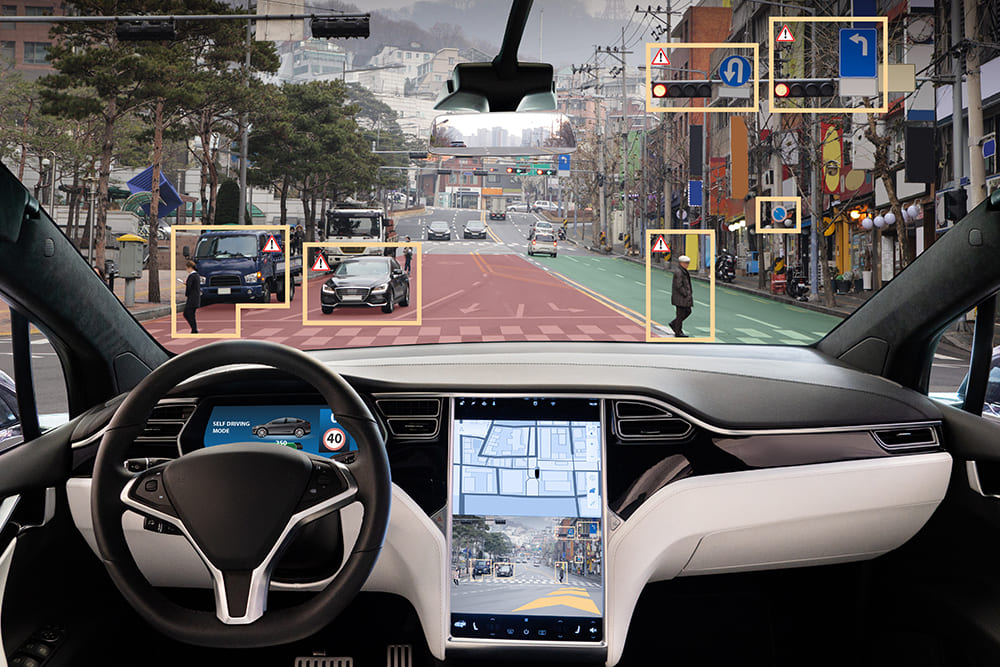
Tesla’s Self Driving Car
The Scale of AI Investment: Record-Breaking Numbers
AI investment has surged to unprecedented levels. Microsoft, Meta, Tesla, Amazon, and Google will have invested about $560 billion in AI infrastructure over the last two years, but have brought in just $35 billion in AI-related revenue combined.
In US, 65% of Venture Capital investment is going into AI or machine learning based startups. OpenAI has raised money at $700 billion, despite its own internal projections showing it will lose over $100 billion over next five years.
The Bubble Case
Investor Hype vs. Reality: OpenAI CEO Sam Altman himself admits that “investors as a whole are overly excited about AI,” likening today’s frenzy to the dot-com bubble of the late 1990s.
Limited Economic Impact: MIT economist Daron Acemoğlu estimates that only 25% of automatable tasks will be economically viable for AI within the next decade, resulting in a modest 0.9% boost in U.S. GDP over ten years—far below the hype.
High Cost of Deployment: Goldman Sachs’ Jim Covello stresses that AI is “extraordinarily expensive”, often trying to replace low-wage jobs with high-cost infrastructure, which questions its long-term business viability
Profitability Concerns: An MIT study found that 95% of publicly disclosed AI projects failed to improve profitability, underscoring a weak business case despite massive investment.
Power & Energy Constraints: AI infrastructure—particularly GPUs and data centers—demands enormous amounts of electricity and cooling, raising concerns about sustainability and scalability.
Overconcentration of Winners: The bulk of AI gains so far are concentrated in a few “Big Tech” firms (NVIDIA, Microsoft, OpenAI), leaving many startups overvalued without clear paths to revenue.
Talent & Data Bottlenecks: Scarcity of specialized AI talent and access to quality proprietary data make it difficult for most firms to compete, further exaggerating bubble-like conditions.
Regulatory Risks: Governments worldwide are exploring AI regulations and antitrust actions, which could slow adoption and profitability.

The Case in Favor of AI
Transformational Potential: AI is not just a single product but a general-purpose technology, much like electricity or the internet, with applications across healthcare, finance, education, logistics, and more.
Productivity Gains: McKinsey estimates AI could add $2.6–$4.4 trillion annually to the global economy by unlocking efficiencies, automation, and decision-making improvements.
Early Success Stories: AI is already proving its value—self-driving assistance, fraud detection in banking, drug discovery, and personalized recommendations (Amazon, Netflix) are clear examples of tangible ROI.
Deflationary Impact: By automating repetitive or low-value tasks, AI has the potential to reduce costs, increase speed, and expand accessibility of services (e.g., education via AI tutors, healthcare diagnostics at scale).
Innovation Catalyst: Generative AI is accelerating content creation, software development, and research, dramatically lowering the cost of experimentation and innovation.
Massive Investment Flywheel: The $320 billion capex commitments from Big Tech in 2025 create strong infrastructure foundations (data centers, GPUs, software ecosystems), ensuring AI development won’t vanish overnight like dot-com failures.
Long-Term Compounding: Just as the internet had a messy, bubble-like start but ultimately transformed the world, AI may follow the same path—early failures won’t negate its long-term structural impact.
Artificial Intelligence is not a short-lived trend or speculative boom—it is a transformational revolution on par with the industrial revolution and the digital revolution, but unfolding at a much faster pace. It is redefining how economies grow, how businesses compete, how governments function, and how individuals live and create. The true measure of its impact will not be in years or even decades, but in the way it permanently alters human civilization.
